REVIEW · OLGIY
Mongolia Trekking Tour in the Altai Tavan Bogd National Park
Book on Viator →Operated by Dauren · Bookable on Viator
The Altai feels huge, even on paper. This 10-day western Mongolia trekking plan pairs serious time on foot with nomad family visits and big Mt. Khuiten-area views. I like how the days are paced so you trek hard without feeling chaotic, and I also like the thoughtful touches around comfort and logistics; the one watch-out is that some river crossings (and long driving days) are not for the faint of heart.
A key reason I’d choose this trip is that it’s built for the national park highlights of Altai Tavan Bogd, then adds real human texture by bringing you to Tuvan and Kazakh herders. You’ll hike through multiple valleys, cross wild sections of trail, and end with a hotel reset back in town.
One possible drawback: at this price level, you’re paying for a remote, guided, all-in setup, so you’ll want to show up ready for moderate physical effort, waterproof boots, and a “camp life” mindset.
In This Review
- Key moments that make this trek worth your time
- Olgii arrival and the offroad start you can’t fake
- Camel-back trekking: light pack days and why it helps
- Malchin Peak at the Russia border: boots matter more than climbing gear
- White River mineral dust and Black Valley Tuvan culture
- Bear Valley and Takhilt Pass: real wilderness, real footwork
- From camel herders to Khoton Lake: a hike, a swim, a hilltop view
- Kazakh eagle hunter family stay and Waterfall Valley hiking
- Hovd Valley lunch and a town hotel night that feels civilized
- Price and what you truly get for $2,300 per person
- Smart packing for waterproof boots, not “maybe someday”
- Who should book this Altai trek from Olgii
- Should you book this Mongolia Trekking Tour in Altai Tavan Bogd?
- FAQ
- How long is the Mongolia Trekking Tour in Altai Tavan Bogd National Park?
- Where does the tour start, and what time does it begin?
- Is this tour private?
- What fitness level do I need?
- How are baggage and camping equipment handled during the trekking days?
- Do I need special climbing gear for Malchin Peak?
- Is the White River drinkable?
- What meals are included?
- Are domestic flight tickets included?
Key moments that make this trek worth your time
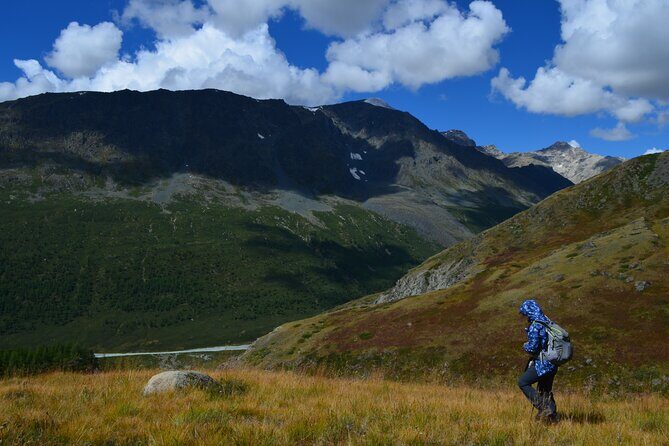
- Camel transport for baggage means you hike lighter and keep your energy for the trail
- Malchin Peak is a long but gear-simple climb with border-area views
- White River valley trekking includes a fun (but not drinkable) mineral-dust twist
- Black Valley and Tuvan family visit adds culture alongside scenery
- Bear Valley and Takhilt Pass deliver real wilderness, including tricky river crossings
- Kazakh eagle hunter yurt stay gives you a different nomad perspective in Waterfall Valley
Olgii arrival and the offroad start you can’t fake
Day 1 begins in Olgii, the gateway to the Altai, with a meet-and-greet at the airport. You’re traveling with an English-speaking guide, a local driver, and your expedition cook—then you point the vehicle toward Altai Tavan Bogd National Park.
The drive takes about six hours, and that time matters. In a region like this, the road-to-trail transition is part of the experience: you’ll watch the mountains shape-shift as you gain altitude and move deeper into the park region. When you arrive, you set camp and prep for the next day’s trek, so there’s no awkward scramble to get organized.
If you hate long rides, plan for it now. This is a trekking trip, not a hop-on, hop-off city weekend.
Camel-back trekking: light pack days and why it helps
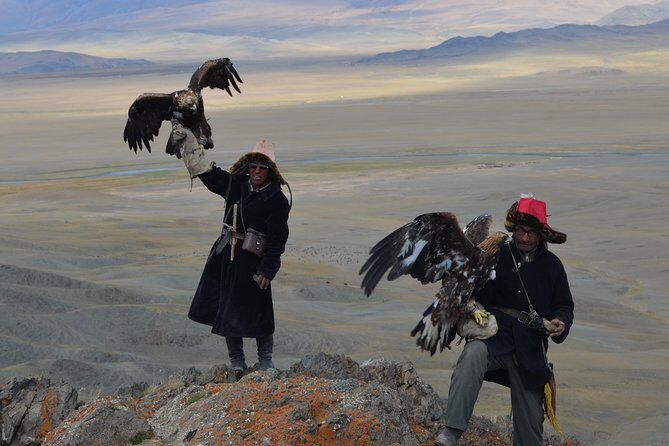
On Day 2, you’ll start by packing for the trail. The big practical win here is that all baggage and camping equipment get transported by camels, so you only need essentials like a lunchbox, water, and a waterproof jacket.
That one detail changes everything. You’re not spending energy hauling heavy gear for hours, and your pack stays more manageable when weather turns. It also makes the hike feel more like a focused experience—walk, view, rest—rather than constant “please carry one more thing” stress.
Today’s trek climbs to the base camp with panoramic views. You can look out toward Mt. Khuiten and the Potanin glacier, which gives you that “this is the real deal” feeling early in the trip.
Malchin Peak at the Russia border: boots matter more than climbing gear
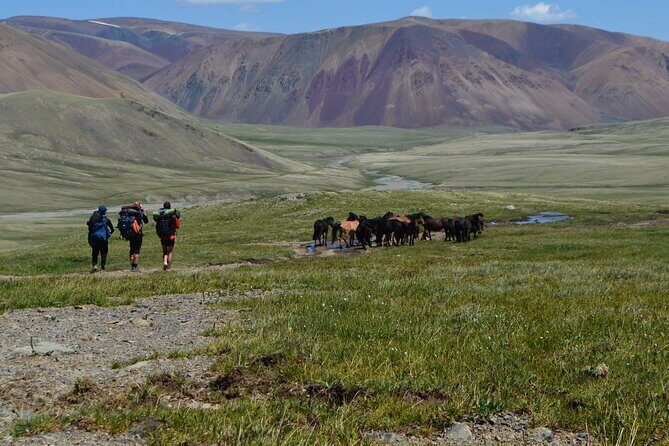
Day 3 is the day for Malchin Peak, which is described as a favorite for good reason. It takes about six to seven hours total and you’ll enjoy a dramatic view because the mountain sits on the borderline between Russia and Mongolia.
The climb is not presented as technical, and you don’t need special climbing gear. What you do need is the unglamorous hero of the mountains: good waterproof hiking boots. Near the top, you’ll hit snow, while other sections are mainly rocks, so you’re balancing traction and protection for changing ground.
Once you’re back at camp, the rest of the day is about recovery. In trekking like this, that matters as much as the summit push. You’ll want your feet ready for Day 4’s different style of walking.
White River mineral dust and Black Valley Tuvan culture
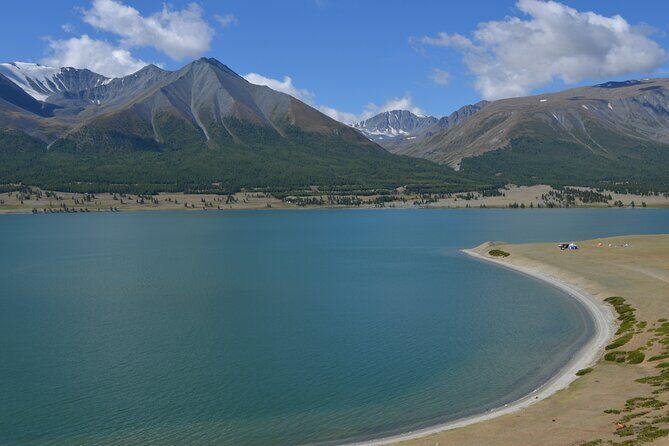
Day 4 shifts you back toward the national park entrance, but on a different, more scenic route along the White River. The river looks white because of mineral dust. It’s a neat visual, but here’s the important part: it’s not drinkable.
That means you plan your drinking water like an adult. Bring what the schedule expects you to carry, and don’t assume river water is safe just because it’s pretty or close. (Yes, it’s tempting. No, don’t do it.)
On Day 5, you trek to Khar Salaa, which means Black Valley. This is also close to Tuvan nomad territory, and it’s one of the cultural reasons this trek feels more than just hiking.
You’ll visit a Tuvan family known for shamanism belief and rituals. You don’t just pass by; you’re a guest of a family and you can learn about traditions directly from the people who keep them alive. It’s the kind of cultural interaction that tends to stick because it’s not staged for photos—it’s part of daily life.
Bear Valley and Takhilt Pass: real wilderness, real footwork
Day 6 is the “hands-on nature” day. Bear Valley is only accessible for a couple of months a year, and getting there requires tackling the highest Takhilt Pass first. This is steep high trail walking, with then a descent all the way down into Bear Valley.
There’s also the part that you should respect: several rivers need crossing, and there is no bridge. The route guidance is described as barefoot crossing or very long jumps, with your guide taking the safest way possible.
I’ll say it plainly: this is the day where you’ll be glad you trained your mindset for discomfort. If you’re the type who panics at sudden changes, tell yourself that the guide’s job is to pick the safer option. Still, approach it with calm and good sense—cold water and slippery banks can be no joke.
The payoff is wild-country hiking at its most authentic: fewer people, more raw terrain, and a sense of space that’s hard to replicate elsewhere.
From camel herders to Khoton Lake: a hike, a swim, a hilltop view
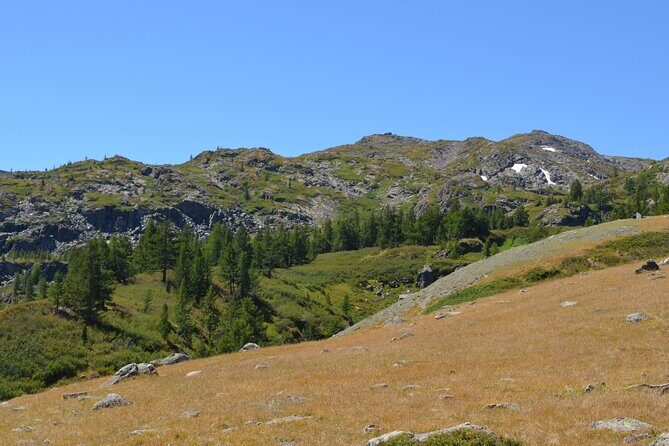
Day 7 begins with a shorter hike—about three to four hours—then you meet the driver at the end of the valley. After that, you leave the camel herders and switch to car travel, which gives your legs a much-needed break.
You’ll drive about two hours to a spot where you can enjoy swimming. Then you have the option to climb Biluu hill for surrounding views, followed by time at Khoton Lake, described as a pure mountain lake with an amazing view.
This day works well if you want variety: foot travel, then recovery, then water and viewpoints. It also helps the trip feel less repetitive. After Day 6, a “reset” day is not a luxury—it’s smart pacing.
Kazakh eagle hunter family stay and Waterfall Valley hiking
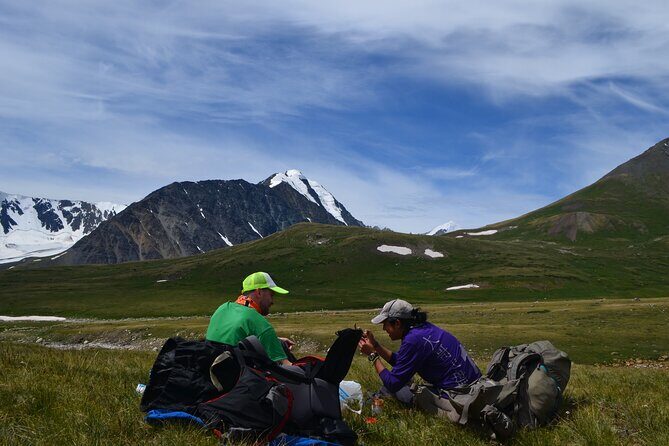
Day 8 starts without rush, and that’s a gift. After lunch, you drive about half an hour to the next place, welcoming the Kazakh eagle hunter family.
Staying as a guest in a traditional yurt is one of the strongest human moments in the whole schedule. You get time to explore their traditions in the afternoon, then you hike for about three hours in Waterfall Valley—back to the yurt for the night after.
This is a good contrast to the Tuvan day. You’re not just collecting “nomad facts.” You’re meeting different groups, different livelihoods, and different ways of being in the same rugged region. If you care about how traditions vary across cultures, this is the part to pay attention to.
Hovd Valley lunch and a town hotel night that feels civilized
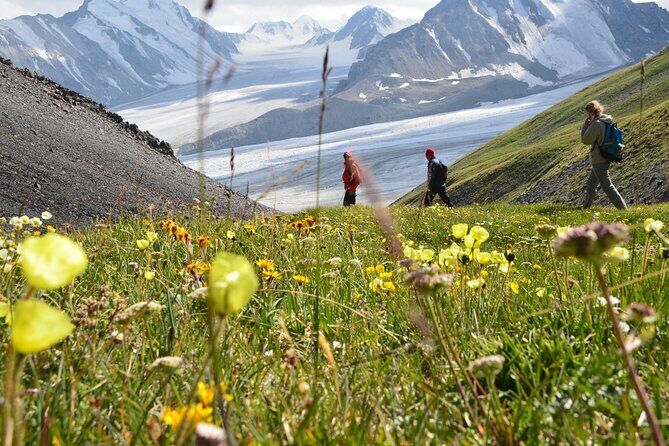
Day 9 turns travel back on full power. You drive back to the province center through endless Altai terrain, and you stop in Hovd Valley for lunch. It’s also the day you stay in a hotel in town.
This hotel night matters more than it sounds. After days of camping and trekking, you get a proper reset: a bed, a more predictable rhythm, and a chance to wash away the “trek dust” that accumulates fast in dry mountains.
You also close with a farewell dinner at a local restaurant. It’s a nice bookend: you finish the adventure with something warm and normal before the trip ends.
Price and what you truly get for $2,300 per person
$2,300 sounds steep until you look at what’s included in a remote park trek. This rate covers accommodation as per the itinerary, national park fees, a private vehicle, driver/guide and local guide, plus meals (breakfasts, lunches, and dinners listed for the days of service).
It also includes key safety-and-comfort support like the expedition cook and planned camping setup for the trekking days. On top of that, the itinerary includes the way-in approach (airport welcome in Olgii) and then the multi-day movement around Altai Tavan Bogd highlights.
What’s not included is also clear: transportation to/from attractions beyond the included transport, alcoholic drinks, and domestic flight tickets. So you’ll want to budget for flights into Mongolia separately and also for any bar bills.
Value check: if you compare this to piecing together transport, guides, park fees, and food yourself, this package is usually where the convenience sits. If you already have your own equipment and want maximum freedom, you might question the cost. But if you want a guided, organized route through a tough environment, you’re paying for that peace of mind.
Smart packing for waterproof boots, not “maybe someday”
This tour makes a few equipment expectations clear. You’ll want a waterproof jacket and water for trekking. Day 3 specifically calls out good waterproof hiking boots because you’ll deal with rocks and snow near the top.
Also remember the White River detail: it’s white from mineral dust and not drinkable. That affects how you manage water. You might find yourself planning water around carry limits rather than assuming you can refill from the river.
Dress code is listed as smart casual, which usually means you’ll want clean layers for evenings and more presentable outfits for town time (Day 9) while still keeping your trekking kit practical for daytime.
Finally, this is a moderate-fitness trek. That doesn’t mean “easy.” It means you should be comfortable walking for hours on uneven ground, with occasional steep sections and at least one day where river crossings get tricky.
Who should book this Altai trek from Olgii
This is a strong fit for you if:
- You want a 10-day guided trek in Altai Tavan Bogd that hits major park areas
- You care about meeting Tuvan and Kazakh nomad families and learning through real time with herders
- You like a mix of hiking, camp nights, and then a town hotel reset
- You’re okay with private logistics and a slower pace that matches remote terrain
It may feel like too much if you hate uneven footing, dislike cold water risk, or prefer fully guided comfort with no physical challenge at all. Day 6 is the stress-test, and the rest of the trip is built around being ready for it.
Should you book this Mongolia Trekking Tour in Altai Tavan Bogd?
I’d say book it if you want a well-structured Altai experience that blends trail time with genuine cultural contact. The schedule is built around meaningful park highlights, and the nomad-family days are placed so you’re not just “passing through” the human side of the region.
Skip it only if your idea of travel is short walks, easy logistics, and zero discomfort. This trek gives you big views, family visits, and memorable remote-country hiking—along with the responsibility to bring good boots, manage water carefully, and stay calm on rougher sections.
If that sounds like your kind of trip, this is the sort of Mongolia adventure you’ll talk about long after the jet lag fades.
FAQ
How long is the Mongolia Trekking Tour in Altai Tavan Bogd National Park?
It runs for 10 days approximately.
Where does the tour start, and what time does it begin?
The tour is based in Olgii, and the start time is 8:00 am.
Is this tour private?
Yes. It’s listed as a private tour/activity, and only your group participates.
What fitness level do I need?
The guidance is moderate physical fitness level.
How are baggage and camping equipment handled during the trekking days?
Baggage and camping equipment are transported by camels, and you carry only essentials like a lunchbox, water, a waterproof jacket, and other trekking needs.
Do I need special climbing gear for Malchin Peak?
No special climbing gear is required, but you do need good waterproof hiking boots.
Is the White River drinkable?
No. The river is white due to mineral dust and it is not drinkable.
What meals are included?
Breakfast, lunch, and dinner are included for the days of service (listed as 9 breakfasts, 9 lunches, and 9 dinners).
Are domestic flight tickets included?
No. Domestic flight tickets are not included.