REVIEW · ULAANBAATAR
Mongolia Nomad Trek • On-Foot & Horseback ~ 15 Day
Book on Viator →Operated by Tusker Trail Kilimanjaro Adventures · Bookable on Viator
That first look at the Altai feels unreal. This Mongolia Nomad Trek mixes horses and hiking with real nomad life—Kazakh eagle hunters, ger camp nights, and high passes near Tavan Bogd.
Two things I really like: the way Eddie Frank, your founding guide, teaches you to ride so you are not guessing in the saddle, and the pure sense of place you get while moving through river valleys, tundra, and glacier country. You also get cultural time early on in Ulaanbaatar, then trade city comforts for mountain days that push you in a good way.
One consideration: this is not a sit-and-sightseeing trip. You should have strong physical fitness, and you’ll be on the move most days—some long walks at altitude, plus horseback time that won’t feel like a theme park ride.
In This Review
- Key Things to Know Before You Go
- Why the Altai Mountains Feel Different From Other Treks
- Ulaanbaatar and the Tuushin Hotel: Your Real Start Line
- The Shift to Bayan-Olgii: Flights, Ger Camp Basics, and Eagle Hunters
- Khoton Nuur Lake and Your First Horse Days
- Alpine Forest to Grassland: Trekking Above the Tsagaan Rivers
- The Sheveet Uul Pass Day and Big-Altitude Reality
- Petroglyphs in the Mongolian Altai: Old Art You Can Still Stand Beside
- Rest Day on a Plateau Lake: Laundry, Breathing, and Reset
- Potanin Glacier Day: Frost-Heave, High Tundra, and Khuiten Peak Country
- Final Trail Day Near Tavan Bogd: Ranger Gate, Then the Come-Down
- Back to Ulaanbaatar and One Last Night Out
- Price and Value: What $8,250 Actually Buys You
- Who Should Book This Mongolia Nomad Trek
- Should You Book?
- FAQ
- Where does the tour start?
- How long is the Mongolia Nomad Trek?
- Is pickup offered?
- Are tickets provided on a mobile format?
- What’s included in the cost?
- Do I need to know how to ride a horse beforehand?
- Where do you sleep during the trek?
- Are there flights and long drive days?
- What fitness level do I need?
- Can I cancel for a full refund?
Key Things to Know Before You Go
- Eddie Frank’s riding focus means you’ll get basics and coaching before longer stretches in the saddle
- Tusker Nadaam horse games and local nomad visits give culture context, not just photo stops
- Waterproof Tusker duffels help manage luggage as you switch between camps and pack animals
- Glacier country at Potanin Glacier puts you close to Khuiten Peak territory and tundra conditions
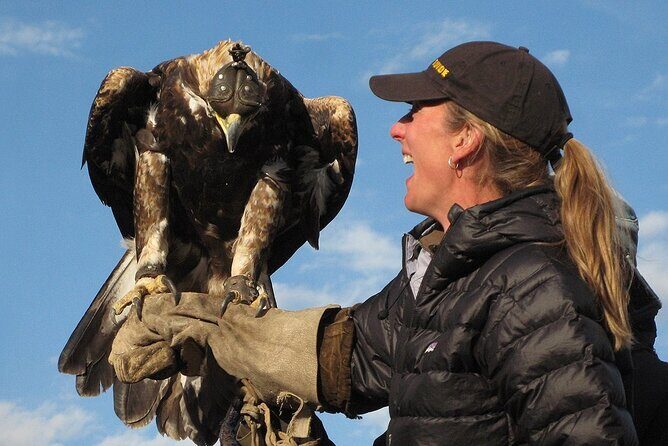
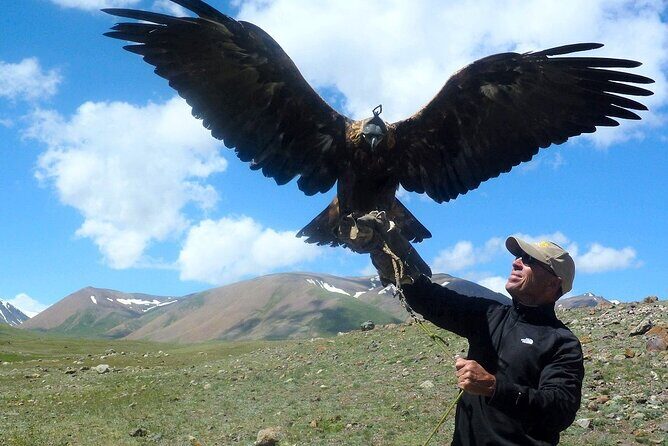
- Kazakh eagle hunting in Bayan-Olgii connects the Altai tradition to the living culture around you
- You’re private with your group, so the pace and plan are set for your team only
Why the Altai Mountains Feel Different From Other Treks
Most treks give you mountain scenery. This one gives you motion through a working nomad world. You’ll spend your days moving through broad river valleys and high passes, then sleeping in the kind of camps that fit the region’s long rhythm of travel.
What makes it special is the mix. You hike, you ride, and you do it in the Altai sector of Mongolia’s western border zone with China—around the Tavn Bogd area where conditions tighten above the treeline. The result is a trip that feels like you’re learning the terrain, not just checking boxes.
You can also read our reviews of more hiking tours in Ulaanbaatar
Ulaanbaatar and the Tuushin Hotel: Your Real Start Line
You begin in Ulaanbaatar, often called UB, and you’ll meet your Mongolian guide after landing. You stay at the Tuushin Hotel for two nights, which is a smart buffer before the flights and mountain logistics.
On day two, you get a guided UB discovery day you can shape around food, museums, shops, and local cashmere culture. In the evening you go to the national theater for a cultural show with colorful costumes and music tied to ancient Mongolian history. This matters because it sets tone: you’re not arriving cold to the nomad traditions you’ll see later.
If you like an easy, flexible day at the start, this helps. If you hate city schedules, you’ll still get free time to wander on your own or with your group.
The Shift to Bayan-Olgii: Flights, Ger Camp Basics, and Eagle Hunters
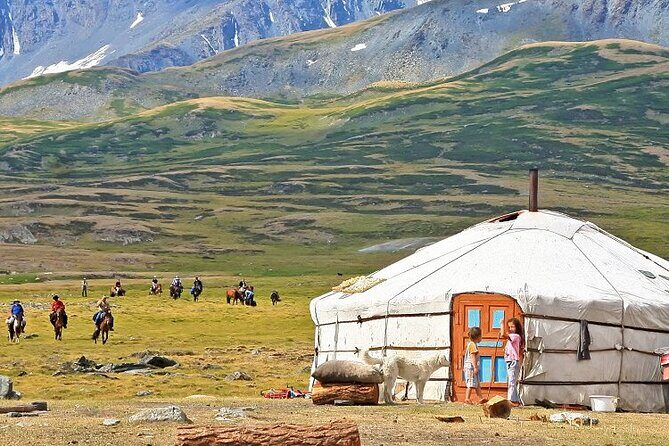
A 3-hour flight takes you west to Bayan-Olgii. This jump is more than distance—it changes the culture around you, and it brings you closer to the Kazakh communities associated with eagle hunting.
Once you reach the area, you drop gear at your ger camp and spend time exploring Ulgii’s outdoor market. Then you’ll try to find a local Kazakh eagle hunter for an up-close encounter with golden eagles. That’s one of the most memorable cultural elements on this trek because it connects the Al tai environment to a skill that is still practiced.
You’ll also switch your luggage system. The tour has you move clothing and gear into waterproof Tusker duffels so packing for the expedition becomes manageable for the animals that carry more than you can.
Khoton Nuur Lake and Your First Horse Days
After a full day drive through the town of Tsengel, you reach Khoton Nuur and camp along the lakeshore for two days. This is where the trek really starts—blue-water vibes, forested areas nearby, and a calmer pace while everyone syncs up.
Next, you do a slow ride in a forested area above the lake while Eddie Frank covers horse basics. The tour uses Australian saddles, and Eddie gives regular riding clinics, including help for people who want to learn how to ride but don’t know what to do once the horse is moving.
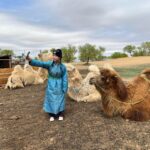
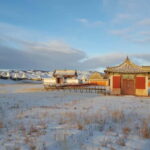
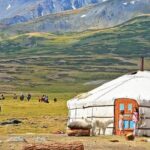
Then you spend time with Kazakh nomads in their gers (tents), learning about traditions and attending nomadic horse games. A big highlight is the “Tusker Nadaam” tradition of horse games, followed by handmade craft time from local women—useful if you want take-home gifts that feel connected to people, not packaged tourism.
Practical note: even when the ride is slow, horses still move as horses move. If you’re new, focus on seat position and balance during Eddie’s instruction days, because later mountain riding asks more from you.
Alpine Forest to Grassland: Trekking Above the Tsagaan Rivers
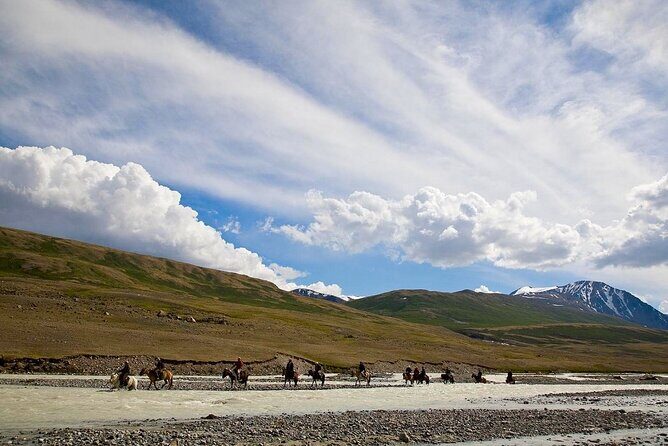
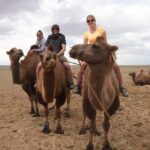
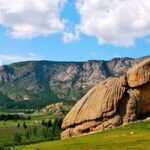
From Khoton Nuur, you start hiking in stages through alpine forest and river-fed terrain. On one day, the camels carry the loads while you trek north, following the Tsagaan Us River system—flowing south from the Tavn Bogd glaciers through the Altai Mountains.
You also see the geology of the region in a way most people miss. The lake basin has horizontal benches that hint at ancient lake levels, likely formed by glacial dams that periodically built up and broke away. That kind of detail makes the scenery feel teachable, not just pretty.
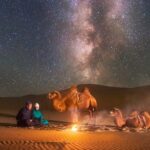
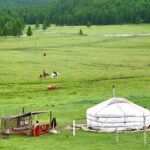
Another day takes you up through a river valley to camp on Cheben Hill, overlooking grassy plains with a few ger camps and goats below. The payoff is a cool, tranquil night with wide-open skies.
Later you descend toward a gorge and trek up along the Tsagaan Gol River, with towering canyon walls on either side. This stretch matters for your pacing: you’ll feel how the trek’s “on foot” days interact with “in saddle” travel—where you might hike higher when riders track the more accessible banks.
A few more Ulaanbaatar tours and experiences worth a look

The Sheveet Uul Pass Day and Big-Altitude Reality
Eventually you leave the river gorge and ascend to a mountain pass around 10,350 ft (3,155 m). That kind of climb changes how you breathe, even if you’re fit. If there’s precipitation, the tour notes you might hike through snow and even need to dig a path. That’s real mountain trekking, not a casual stroll.
You then camp at Sheveed Uul Gorge after descending a steep incline on foot. The practical value here is that you get a full “mountain pass experience” in a structured way: hike up, manage footing, descend, then settle into camp with the team.
Petroglyphs in the Mongolian Altai: Old Art You Can Still Stand Beside
One day includes a visit to a small ger community with Tuvan people following traditional shamanistic beliefs. During lunch you also discover petroglyphs—described as among the largest, oldest, and most pristine concentrations of rock art in North Asia.
These petroglyphs run from about 11,000 years ago into the 9th century, and they depict ancient cultural landscapes. I love moments like this because they stop the trek from becoming only a physical challenge. You see how people used these same valleys long before modern maps, and you understand why routes mattered.
After that you descend into the Tsagaan Gol river valley and spend two nights camping with an extraordinary view of distant glacier peaks. This is the kind of camp view you remember on normal days back home.
Rest Day on a Plateau Lake: Laundry, Breathing, and Reset
On day eleven, you get a true rest day. You take a scenic hike to a hidden azure-blue lake (described as a beautiful plateau lake) a few miles from camp, plus time to do laundry and relax.
For me, this is one of the smartest parts of the schedule. After multiple days of hiking and altitude exposure, a reset keeps you from going into the glacier day drained. You’ll also get a mental break from the constant planning of where to step next.
Potanin Glacier Day: Frost-Heave, High Tundra, and Khuiten Peak Country
Then comes the toughest section: a challenging trek over frost-heave uphill to Potanin Glacier. The trek notes the glacier sits at the foot of Khuiten Peak (14,350 ft), and it frames the area as tundra above treeline with lichen-covered rocks, alpine meadows, and high mountain swamps.
It’s a physically demanding day, and it’s also a sensory one. You’ll be in a place where the environment feels harsher and quieter—very few animals can adapt there, so your attention turns to footing, weather changes, and the shape of the mountain.
This is also where the tour gives you “why it matters” context: you’re near the region’s defining high points and the triple border area referenced in the route. The scenery and the difficulty reinforce each other.
Final Trail Day Near Tavan Bogd: Ranger Gate, Then the Come-Down
After leaving the Tavn Bogd peaks behind, you head north and east to the national park ranger station gate. This is your last day trekking, and the tour frames it as your final chance to give your horse its head and have a run.
You unload camels, meet vehicles, and overnight at a ger camp. Then you shift again—this time from mountain routine back toward travel comfort.
Back to Ulaanbaatar and One Last Night Out
You fly back toward Ulaanbaatar via Ulgii and overnight at the Tuushin Hotel, then go out on the town for one final night. This is a useful reset if you’ve been living in layers, boots, and camping mode.
On the last day you transfer to Chinggis Khaan International Airport for onward plans. You’ll be saying goodbye to your guide, and for many people that’s the emotional part—because the trek’s pace and care are tied to who’s guiding it.
Price and Value: What $8,250 Actually Buys You
At $8,250 per person, this is a premium adventure. The value is in what’s already handled for you, especially when you compare it to piecing together flights, guides, horses, and remote logistics on your own.
Here’s what the price supports, based on what’s included:
- Private transportation across the city-to-mountain transitions, including flights and drives between major points
- All main meals: 13 breakfasts, 13 lunches, and 13 dinners
- A trek structure that blends guided horseback coaching with hiking days and camp-to-camp movement
- Entry into the experience layers: nomad visits, horse games, and cultural stops in Ulaanbaatar
What’s not included is also clear: travel fees from your home origin to Mongolia, and certain onward airport plans. So you’ll want to budget those separately.
In plain terms: if you want an organized way to get to the Altai with a team that knows horses and remote camps, this price starts to look reasonable. If you’re chasing low cost, this is not the trek for you.
Who Should Book This Mongolia Nomad Trek
You’ll love it if you want an authentic mountain journey with real cultural encounters and you’re happy trading comfort for movement. It fits especially well for people who:
- Are comfortable hiking in mountains and can handle long days
- Want to learn horseback riding from a guide who teaches, not just assigns a saddle
- Care about meeting nomad communities and seeing traditions like Kazakh eagle hunting up close
- Want glacier-country scenery near the Tavn Bogd region, not just foothills
It’s a tougher fit if you dislike physical exertion or if you’re hoping for a mostly-casual ride with minimal hiking. The trip is built around effort.
Should You Book?
If your idea of a great vacation includes learning how to ride a Mongolian horse, seeing golden eagles in the Altai region, and spending days in river valleys and high passes, then yes—you should seriously consider booking. This route is designed to connect landscape, culture, and skill-building into one coherent adventure.
If you want a trip that feels easy and low effort, skip it. This is a real trek, with real altitude and real mountain conditions. But if you’re ready to work a bit for the views, this one has a strong chance of becoming the kind of trip you talk about for years.
FAQ
Where does the tour start?
The trek starts at Buyant Uhaa Airport in Ulaanbaatar, Mongolia.
How long is the Mongolia Nomad Trek?
It’s about 15 days.
Is pickup offered?
Yes, pickup is offered.
Are tickets provided on a mobile format?
Yes, the tour offers a mobile ticket.
What’s included in the cost?
The tour includes private transportation and 13 breakfasts, 13 lunches, and 13 dinners.
Do I need to know how to ride a horse beforehand?
No. Eddie Frank provides regular riding clinics and helps teach you how to ride, including basics early in the trek.
Where do you sleep during the trek?
You stay in the Tuushin Hotel in Ulaanbaatar and use ger camps during the trek.
Are there flights and long drive days?
Yes. The route includes flight segments (including a 3-hour flight west to Bayan-Olgii) and long drive days, such as the multi-hour drives toward Khoton Nuur.
What fitness level do I need?
You should have a strong physical fitness level.
Can I cancel for a full refund?
Free cancellation is available up to 24 hours in advance for a full refund. The tour also notes it requires good weather and may offer a different date or a full refund if canceled due to poor weather.