REVIEW · ULAANBAATAR
Semi-Gobi and Kharkhorum overnight private trip
Book on Viator →Operated by Nomadic Hospitality Mongolia · Bookable on Viator
A long drive, then real Mongolia hits. This private Semi-Gobi and Kharkhorum overnight trip takes you out past Ulaanbaatar, where sand dunes meet Buddhist history. With English-speaking guides like Iggy, Namja, and monkhmanlai (all mentioned in the team’s past trips), you’ll get a clear picture of Mongolia’s culture without the guesswork.
What I love most: the chance to slow down with a nomadic Mongolian family and eat traditional food as part of the day—not as a staged stop. You also get a proper camel ride at Elsen Tasarkhai, plus time in quiet places like Khugnu Gobi monastery.
One drawback to plan for: this is a road-heavy day. Expect at least 4 hours of driving each day, and the full schedule can feel long even if the official duration is listed around 1 day 6 hours. Pack warm layers, because on at least one trip, snow fell overnight.
In This Review
- Key highlights (the stuff that makes this work)
- Getting Out of Ulaanbaatar: Emeelt, Urikhan, and the First Real Break
- Semi-Gobi Entrance at Elsen Tasarkhai: A Real Lunch With a Mongolian Family
- Camel Ride on the Dunes: The Semi-Gobi Moment You’ll Remember
- Khugnu Gobi Hugune Tarani Monastery: A Quiet Reset in the Middle of the Adventure
- Kharkhorin and Kharkhorum Museum: Old-Capital Context Without the Overload
- Erdene Zuu Monastery: Stones Carrying the Past
- Overnight in a Private Yurt Near the Family: Comfort That Still Feels Remote
- Pace, Safety, and the Value of a Real English-Speaking Guide
- Price and What $390 Gets You (and What It Doesn’t)
- Who This Private Semi-Gobi and Kharkhorum Trip Suits Best
- Should You Book This Semi-Gobi and Kharkhorum Overnight Private Trip?
- FAQ
- What time does the tour start, and where do we meet?
- How long is the trip, and how much driving should I expect?
- Is this a private tour or a group tour?
- What’s included in the price?
- Are camel rides included?
- Which major religious sites are visited?
- Is admission to museums or monasteries included?
- Can I request food, and can I choose a private yurt?
- What happens if the weather is poor?
Key highlights (the stuff that makes this work)
- Private tour by your group: just you and your guides in an air-conditioned vehicle
- Nomadic family lunch and dinner: traditional Mongolian food included, with a chance to connect
- Camel ride in the Semi-Gobi dunes: a classic activity built right into the schedule
- Khugnu Gobi Hugune Tarani monastery: time for exploration and optional meditation/prayer
- Kharkhorin + Erdene Zuu: old-capital context with a real temple complex made from ancient stones
- Overnight in a yurt option: you can request a private yurt next to the family
Getting Out of Ulaanbaatar: Emeelt, Urikhan, and the First Real Break
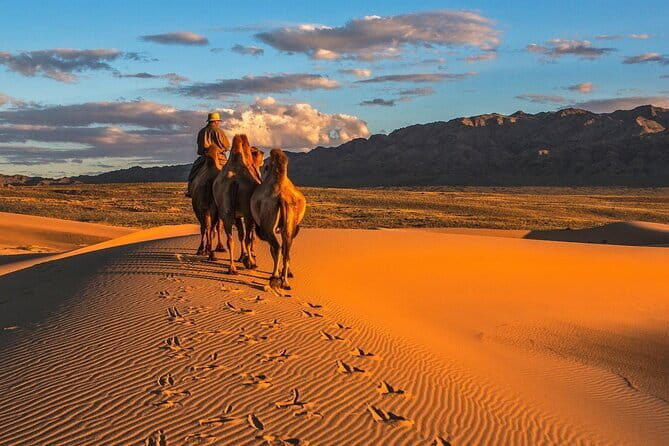
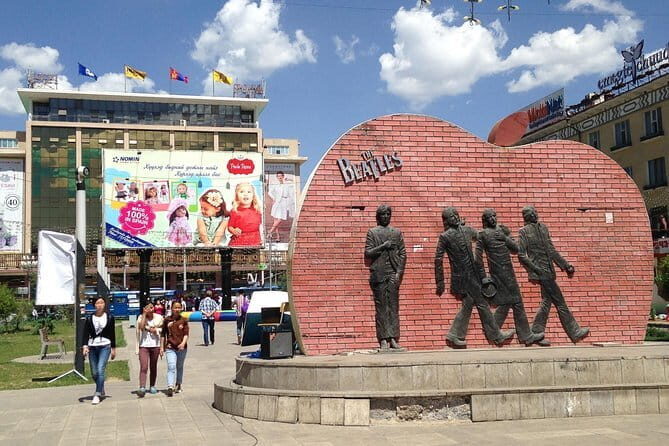
The day starts early, with pickup and meeting at Sukhbaatar Square around 8:00am. From there, the first chunk is mostly about leaving the city behind. I like that this tour doesn’t pretend the drive won’t be part of the experience. If you’re the type who gets antsy on long roads, you’ll appreciate that the timing builds in stops rather than forcing a straight haul.
First stop is Emeelt, a big industrial area just outside the city proper. It’s not the postcard. But it does something useful: it shows you how Ulaanbaatar connects to the wider country. In real life, Mongolia’s tour routes are shaped by roads, industry, and access—not just scenery.
Then you hit Urikhan, one of the earlier modern rest stops. It has restrooms, a coffee shop, restaurant, and store. You get about 30 minutes of free time, which is perfect for a quick snack run or just stretching your legs before the countryside pulls you in.
Who this helps most: if you’re arriving in Ulaanbaatar and want your first day outside the city to feel organized.
Who should think twice: if you’re hoping for immediate dramatic views from minute one. The early stops are practical.
You can also read our reviews of more private tours in Ulaanbaatar
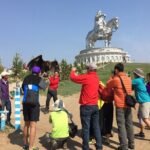

Semi-Gobi Entrance at Elsen Tasarkhai: A Real Lunch With a Mongolian Family
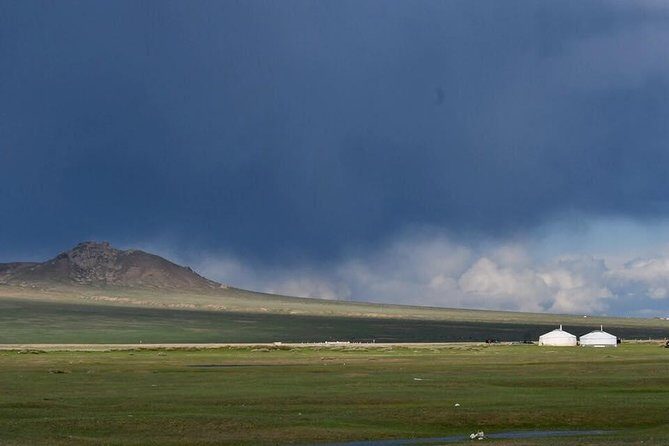
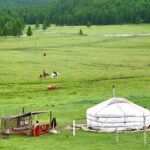
Once you reach the Semi-Gobi area, the schedule shifts from “getting there” to “settling in.” You stop at a rest area near the entrance for a break. Then you move on to lunch with a nomadic Mongolian family.
This is one of the best value pieces of the whole trip. Lunch is included, and it’s described as traditional Mongolian food served at the family’s place. In Mongolia, food can feel like more than fuel when it’s part of daily life with herders and community rather than a restaurant detour. If you care about culture you can taste, this is the moment.
Two practical notes matter here:
- You can request food. That’s important if you have preferences or restrictions.
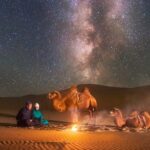
- You’re on a full-day, so the lunch isn’t a quick bite. It’s a real pause before sand dunes take over your camera roll.
I’d treat lunch as your energy anchor for the rest of the day. Once you’re in the Semi-Gobi, you’re trading comfort for a different pace—wind, open space, and that dry, crisp feel that makes you want to stand outside and just look.
Camel Ride on the Dunes: The Semi-Gobi Moment You’ll Remember
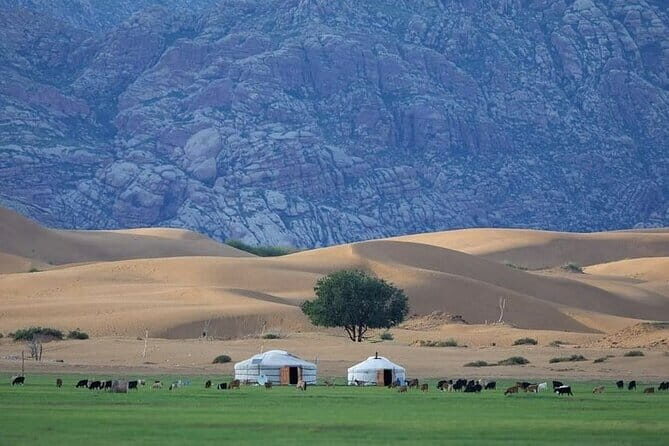
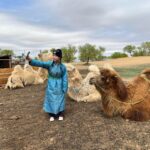
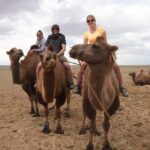
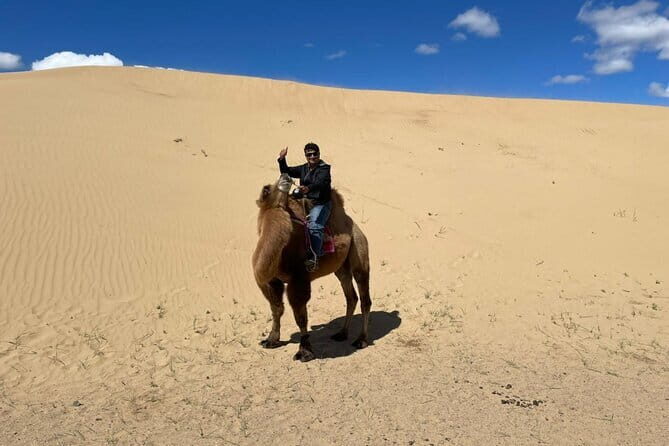
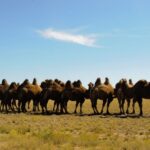
The main attraction is the sand dunes of Elsen Tasarkhai (the local name is referenced in the tour description). And yes, the camel ride is included.
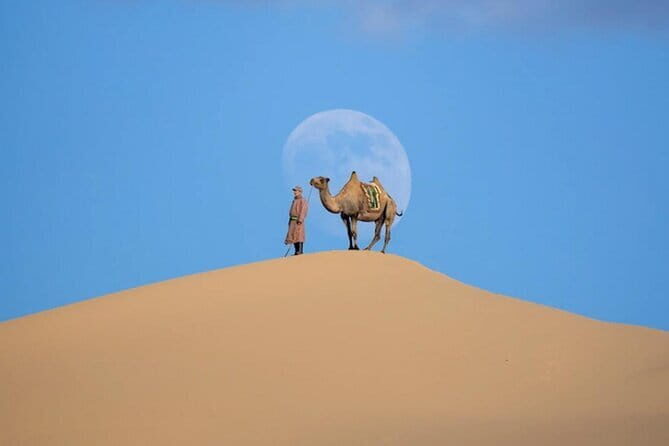
Camel rides in Mongolia aren’t just a box-check activity. They’re one of the few ways to move through dune country that feels both old and genuinely scenic. You get a slower rhythm, more horizon time, and better chances for photos than if you were just hiking a path for a quick stop.
This is also where you should plan for real weather. Even if you think you’re only dealing with sand and sun, pack for cold and wind too. One of the guides’ past experiences included unexpected snow overnight. That’s not something you can predict on purpose. So bring warm layers anyway and don’t travel like it’s guaranteed to be summer-perfect.
Small tip from the way the day is run: guides are attentive about breaks. In past trips, guides and drivers were proactive about bathroom breaks, and they’ve also made photo detours when something caught your eye. That flexibility matters in places where you can’t just pull off the road whenever you want.
Khugnu Gobi Hugune Tarani Monastery: A Quiet Reset in the Middle of the Adventure
After the desert time, the itinerary includes a stop at Khugnu Gobi and Hugune Tarani Buddhist monastery in the national park. Here, the tour isn’t about charging ahead for photos every minute. It’s more about stepping into a different mood.
You’ll visit the monastery complex and explore the area. Some people can do meditation or prayer, if that’s part of their comfort zone. Even if you’re not there to participate spiritually, it’s still a meaningful pause. Mongolia isn’t only about animals and wide open land; it also has long-standing religious places that help explain how communities grew and stayed connected to place.
Practical approach for this stop:
- Dress respectfully. (Think warm layers plus something modest if you’ll go inside.)
- Move at a calm pace. Two hours is enough to look around without rushing.
Consideration: If you’re hoping for purely outdoors adrenaline, this stop might feel more reflective than eventful. But it balances the dunes with a human story.
Kharkhorin and Kharkhorum Museum: Old-Capital Context Without the Overload
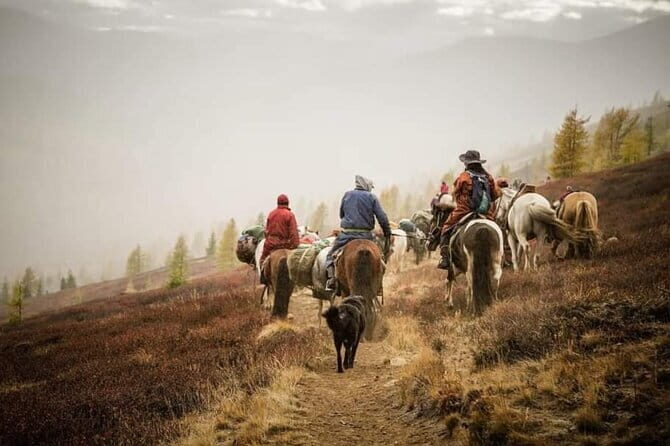
From the monastery area, the trip heads toward Kharkhorin and the old-capital theme continues. Kharkhorin is described as having around 20,000 residents, and it’s becoming livelier compared with smaller herding settlements. That matters because it gives you a sense of Mongolia beyond camps and ruins.
First you visit the Kharkhorum Museum. It’s called an informative small museum, and you get about two hours there. I like this setup because it gives you a framework before you see the bigger religious site later. Without context, ruins and temples can blur together. With context, the stones start to mean something.
The museum isn’t presented as a chore. It’s a time to understand what you’re about to experience and why Kharkhorum matters.

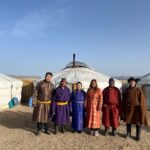
Erdene Zuu Monastery: Stones Carrying the Past
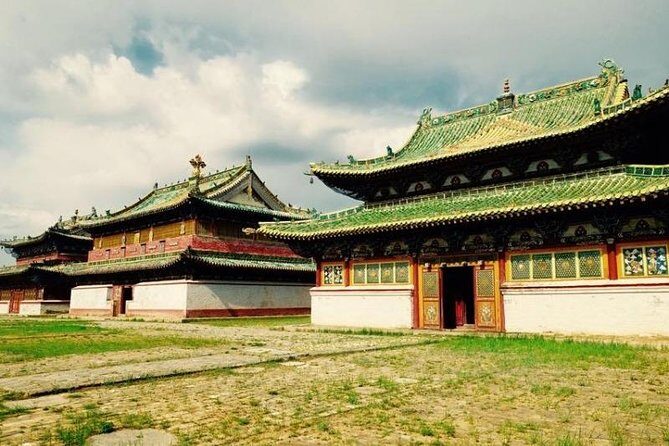
Next up is Erdene Zuu Monastery, described as the oldest surviving Buddhist temple in Mongolia. The main temple complex is turned into a museum, and here’s the detail I really appreciate: the complex is built using old bricks and stones from the Kharkorum ruins.
That kind of construction detail is rare and tangible. You’re not only seeing a functioning place of worship and heritage; you’re seeing the physical effort of reusing materials from earlier times. It’s one of the ways Mongolia keeps history in sight instead of pushing it into distance.
Admission is included for the visit. The time pressure here depends on your group pace and how much you like to wander, but you should expect a meaningful stop rather than a quick drive-by.
If you like history but hate slow museum marathons, this hits a good balance: walkable temple space, clear highlights, and enough information to make the site click.
Overnight in a Private Yurt Near the Family: Comfort That Still Feels Remote
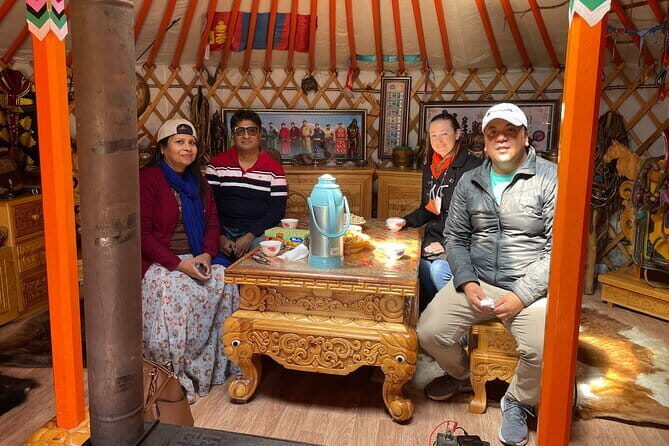
Although the trip is listed with an approximate duration of 1 day 6 hours, the structure clearly includes an overnight stay. That’s confirmed by the included dinner and breakfast—and it’s a key part of why the experience feels different from a quick day trip.
You get an overnight in a yurt (ger) tied to the nomadic setting. There’s an important accommodation option: the tour states there are two accommodation options for private yurt next to the nomadic family. One of the past experiences describes paying more for a private car and a ger with a private bathroom, and that it was worth it.
So how should you think about it?
- If you want the full “we slept in a ger” feel, the yurt option delivers it.
- If privacy is your priority, you’ll want to choose the more private yurt arrangement when available.
Also, guides handle practical issues. In one past experience, the guide was attentive about details like bathroom breaks. On trips like this, that’s not luxury. It’s the difference between feeling confident and feeling stressed.
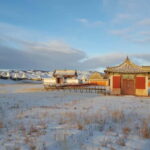
And yes, you should bring warm stuff even if it’s not freezing in the city. On at least one trip, snow fell overnight. Yurts are cozy, but the temperature outside still matters.
Pace, Safety, and the Value of a Real English-Speaking Guide
This is a private tour with a certified guide and an air-conditioned vehicle. That A/C detail matters more than you’d think when you’re on long roads. After hours in the car, being able to cool down (or at least not overheat) helps you enjoy the stops instead of counting minutes.
The guides are also described as people who do the tours personally, with English skills and western cultural understanding. In past experiences, the guide names that came up included Iggy, plus Namja and monkhmanlai. Common thread: interactive conversation, historical context, and flexibility.
A couple of practical takeaways you can plan around:
- Expect long drive blocks—at least 4 hours of driving each day is noted.
- You can ask for detours for photos, especially when the guide spots something interesting.
- Safety and comfort are a stated focus, so it’s not a hurry-up sprint.
I’d mentally label this as a “big day” even if it fits into one official day. Bring a sense of patience. Mongolia rewards the slow parts.
Price and What $390 Gets You (and What It Doesn’t)
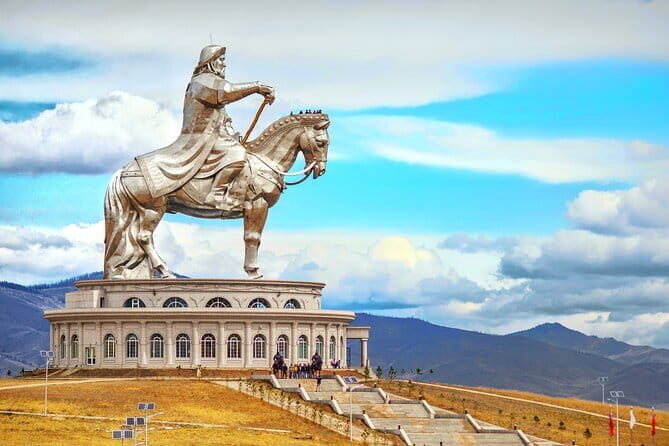
At $390 per person, this isn’t a bargain-basement Mongolia day. But it also isn’t just a seat in a van. You’re paying for a private group experience, a guide, and a lot of included value.
Here’s what’s included:
- Certified guide
- Air-conditioned vehicle
- Camel ride in the sand dunes
- Bottled water
- Lunch with a nomadic family (traditional Mongolian food)
- Dinner and breakfast
Plus, admissions are listed as free or included depending on the stop. For example, Emeelt and Urikhan are free, while visits like the monastery and Erdene Zuu have included admissions. That helps protect you from surprise costs.
What’s not included is straightforward: snacks, soda, and coffee. If you’re the type who snacks constantly, plan to buy extras at rest stops.
Group discounts are mentioned too, which can matter if you have friends traveling together. But the headline value is simple: meals + camel ride + guide + overnight ger, all organized end to end.
Who This Private Semi-Gobi and Kharkhorum Trip Suits Best
This trip is ideal if you want a mix of:
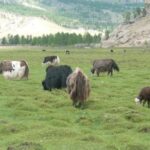
- Semi-Gobi sand dunes and animals/herds you might spot in the broader countryside
- A nomadic family meal experience
- Spiritual stops like Hugune Tarani monastery
- Historical anchors like Erdene Zuu and the Kharkhorum museum
It also fits solo travelers, couples, and small groups who want real attention from a guide. One of the experiences described a woman touring alone and feeling well-supported. Private tours also help if you’d rather set your own pace inside a shared plan.
Who might want to skip it:
- If long drives make you miserable
- If you only want the most scenic part of the day and don’t care about museums, temples, or monastery time
- If you’re traveling with the expectation of constant short stops and no overnight logistics
Service animals are allowed, and the tour notes that most travelers can participate. So this is built for a broad range of comfort levels—just not for anyone who hates roads.
Should You Book This Semi-Gobi and Kharkhorum Overnight Private Trip?
If your Mongolia wish list includes camel ride dunes, real nomadic hospitality, and a serious historic stop at Erdene Zuu, I think this is a strong booking. The price hurts a bit at first glance, but it’s softened by included meals, the camel ride, admissions at key sites, and the fact it’s private with an English-speaking guide.
Book it if:
- you’re okay with a long day of driving
- you want more than one type of Mongolia (desert, grassland feel, monasteries, old-capital context)
- you’ll treat the overnight yurt as the point, not the inconvenience
Skip it if you want a short, easy outing with minimal travel time. This one trades comfort of schedule for depth of experience.
FAQ
What time does the tour start, and where do we meet?
The meeting point is Sukhbaatar Square, Ulaanbaatar, Mongolia, and the start time is 8:00am. Pickup is offered, and the activity ends back at the meeting point.
How long is the trip, and how much driving should I expect?
The duration is listed as about 1 day 6 hours (approx.). The overview also notes at least 4 hours of driving each day, so it should feel like a long outing even within the same-day schedule.
Is this a private tour or a group tour?
This is a private tour/activity. Only your group participates.
What’s included in the price?
Included items are: a certified guide, an air-conditioned vehicle, camel ride in the sand dunes, bottled water, lunch (traditional Mongolian food at a nomadic family), dinner, and breakfast.
Are camel rides included?
Yes. The package includes a camel ride in the sand dunes.
Which major religious sites are visited?
You visit Hugune Tarani Buddhist monastery in the Khugnu Gobi area, and later Erdene Zuu Monastery (Erdene Zuu is described as the oldest surviving Buddhist temple in Mongolia).
Is admission to museums or monasteries included?
The tour schedule lists some stops as free (like Emeelt and Urikhan) and others as included (like the Hugune Tarani monastery visit and Erdene Zuu admissions).
Can I request food, and can I choose a private yurt?
You can make a request on food. For overnight, there are two accommodation options for a private yurt next to the nomadic family.
What happens if the weather is poor?
The experience requires good weather. If it’s canceled due to poor weather, you’ll be offered a different date or a full refund.