REVIEW · ULAANBAATAR
8 Days Tour: Gobi Desert And Kharkhorin
Book on Viator →Operated by Mongolian Tour Guide · Bookable on Viator
White cliffs, ice, and dunes.
This 8-day small-group trip (no more than 10 people) is built for big-distance feeling without big-tour chaos, and it hits real wow spots like Tsagaan Suvarga and Khongor Els. I also like that the day-to-day rhythm is guided and practical, with round-trip transfers from Ulaanbaatar and most meals handled for you. The trip style keeps things social without turning into a herd.
One consideration: this is an out-in-the-conditions type of journey, so you’ll want to be okay with long drives, variable camp comfort in yurts or tourist camps, and a good-weather dependence.
In This Review
- Key things to know before you go
- The big idea: Gobi wow, without the lost-in-translation stress
- Day 1: Baga Gazariin Chuluu’s granite, temple ruins, and a small spring
- Tsagaan Suvarga White Stupas: 62 meters of wind-carved wonder
- Yoliin Am ice canyon: the Zuun Saikhan strict-protection gorge
- Khongor Els sand dunes: 180 km of big curved lines
- Bayanzag and the Flaming Cliffs: dinosaur country with a strong explorer story
- Ongyn Monastery on the Ongi River: temple life that continues (quietly)
- Kharakhorin and Erdenezuu: Chinggis Khan’s capital, then monastery tombs
- Day 8 return to Ulaanbaatar, plus cashmere brand stops
- Price and pacing: what you’re really paying for
- Who this tour suits best
- Should you book this Gobi and Kharkhorin tour?
- FAQ
- How big is the group on this Gobi and Kharkhorin tour?
- Where does the tour start in Mongolia?
- What time does the tour begin each day?
- What meals are included?
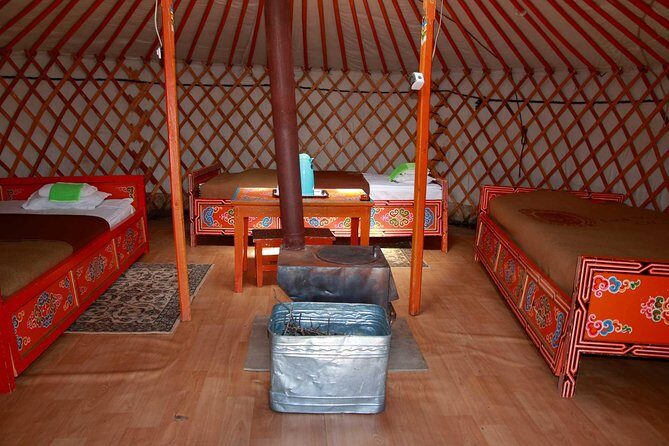
- What kind of accommodations should I expect?
- What major sights are included?
- What activities are planned during the trip?
- What if the weather is bad?
Key things to know before you go
- Small group size (up to 10) helps you move faster and ask questions without shouting over engines.
- White Stupas geology: Tsagaan Suvarga is 62 m high, and fossil seashells come from when it was a sea bottom.
- Yoliin Am’s strict-protection canyon: an ice canyon with steep rocky walls about 200 m high in the Zuun Saikhan Mountains.
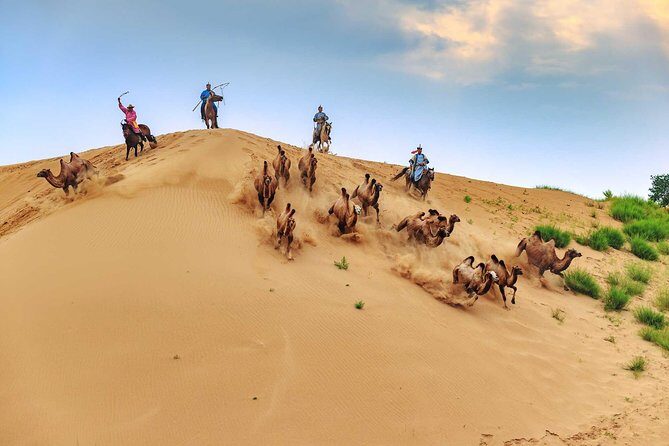
- Khongor Els dunes stretch 180 km with tall dunes (15–20 m) for wide-angle photos and quiet, open views.
- Kharakhorin + Erdenezuu: the 13th-century capital story, then a visit to the monastery complex inside the ruins area.
- Service focus shows up in feedback: organization, tour guide, and the driver get strong credit, including a warm follow-up message from Enkhzaya Ganbold.
The big idea: Gobi wow, without the lost-in-translation stress
The best tours are the ones that solve problems you don’t want to solve at home: timing, logistics, and knowing what you’re looking at. This one does that with a clear route across the Gobi desert region and toward Kharkhorin (Kharakhorum), plus a small-group cap that keeps the experience from feeling like a factory run.
You start in Ulaanbaatar and you’re not stuck piecing together transfers. Most meals are included too, with 7 breakfasts, 8 lunches, and 7 dinners. That matters here because the days are active and the distances are big. Fewer meal hunts also mean more time for the places you came for: cliff formations, protected canyons, dunes, monastery ruins, and the famous dinosaur country nearby.
The other smart touch is that the tour is structured around outdoorsy moments—hiking, climbing up to lookouts, and photo stops. That gives you more than drive-by sightseeing. You’re meant to experience the terrain, even if you do it at a comfortable tourist pace.
You can also read our reviews of more tours and experiences in Ulaanbaatar.
Day 1: Baga Gazariin Chuluu’s granite, temple ruins, and a small spring
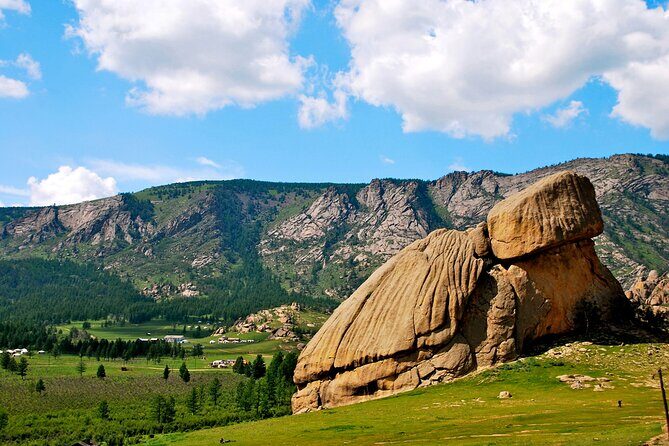
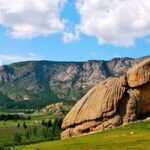
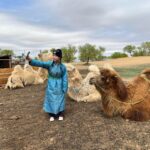
You kick things off by heading to Baga Gazariin Chuluu, a local protected area made of granite with an elevation around 1,751 meters. This isn’t just a pretty rock stop. You get several small, interesting things in one compact area: a Buddhist temple ruin that was used by monks, a stone hole with spring water for the eyes, and a small cave.
What I like about this first day is the way it eases you into the trip. Instead of throwing you straight into the most dramatic desert scenery, you start with something grounded: geology and a few spiritual traces in a protected setting.
Practical note: after a travel day and early departure, these “small but meaningful” stops are a good match. You can walk a bit, take photos, and still save your energy for the longer, more iconic natural wonders later.
Tsagaan Suvarga White Stupas: 62 meters of wind-carved wonder
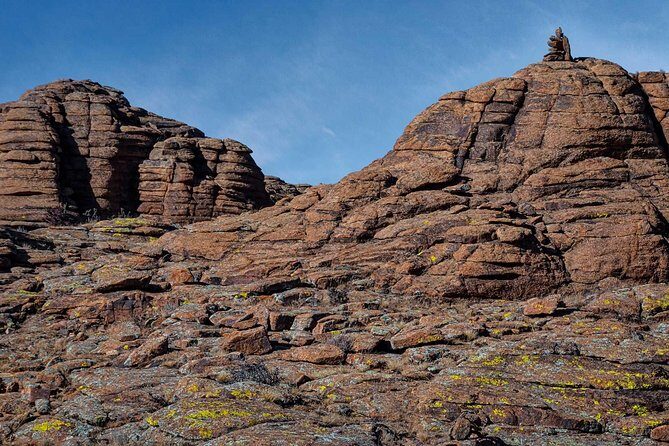
On Day 2, the tour takes you to Tsagaan Suvarga, often called the White Stupas. This is one of those places where distance helps your eyes. When you see it from far away, the cliff can look like ruins of an ancient settlement—or like a cluster of pale stupas rising out of the earth.
The details are the point here. Tsagaan Suvarga is described as being 62 meters high and 400 meters wide, carved by wind over an immense timescale. Even more cool: it was once a sea bottom, so the eroded cliffs contain fossil seashells. In other words, the Gobi isn’t only desert today; it holds a story of when this region was underwater.
A possible drawback: because it’s a cliff formation and the day is outdoors, your comfort depends on the day’s conditions—sun, wind, and temperature swings can be real. Bring layers so you can handle quick shifts, and keep water handy during viewpoints.
Yoliin Am ice canyon: the Zuun Saikhan strict-protection gorge
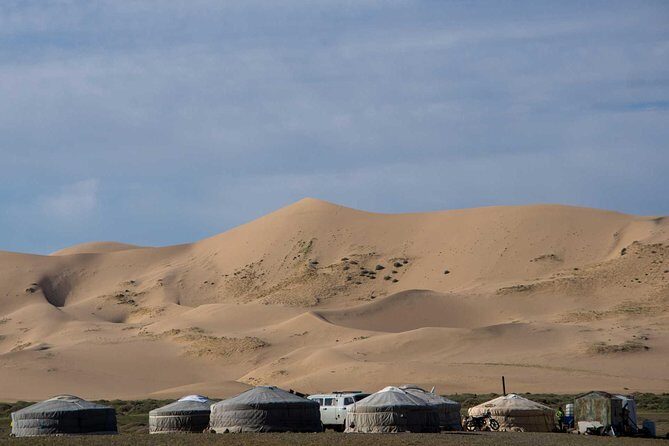
Day 3 brings you to Yoliin Am, a narrow ice canyon where a river flows through the Zuun Saikhan Mountains. The gorge has steep rocky walls—about 200 meters high in the central part—so it feels tight and dramatic even before you get to the ice-canyon look.
This area is protected and has strict protection status. It’s been protected since 1965, and the protected area covers about 70 square kilometers. That protection matters because it helps keep the place from turning into a showground. You’re there to observe and photograph, not to fight crowds.
What you’ll appreciate: the walking is part of the experience. You’re not just photographing from one spot. If you’re okay with uneven ground and some stairs/paths in mountainous terrain, you’ll get more out of the visit.
One consideration: this is the kind of place where weather can change what you see. If conditions are poor, you may need to adjust expectations and focus on the canyon walls and the canyon feel rather than only the ice.
Khongor Els sand dunes: 180 km of big curved lines
Day 4 is Khongor Els, the sand dunes that stretch about 180 kilometers. The dunes in the northern part of the Sevree and Zuulen mountains are described at roughly 15–20 meters high. That’s big enough for wide, graphic photos—curves, shadows, and the layered look you only get when the sun hits at an angle.
This stop is also a good reminder of the Gobi’s scale. The desert zone is described as about 3% of Mongolia’s territory, so when you’re in it, it can feel like the planet has decided to simplify everything: sky, wind, sand.
Photo tip that’s practical: dunes are all about light. If the day is bright, you’ll get crisp lines. If it’s overcast, you’ll still get texture, just with softer contrast. Plan to spend time on viewpoints rather than rushing through for quick shots.
The only real caution: sand days are dusty days. Wear something comfortable you can adjust for sun and wind, and expect to brush off sand from clothes and gear.


Bayanzag and the Flaming Cliffs: dinosaur country with a strong explorer story
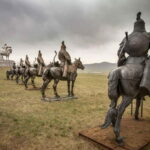
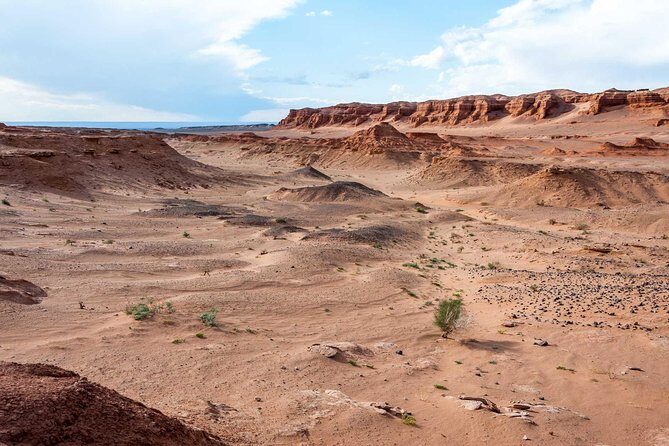
On Day 5, you go to Bayanzag, famous worldwide for dinosaur fossils. It’s near the center of Bulgan Soum, and the discoveries include complete skeletons, eggs, and hatchlings from the Cretaceous period.
The named dinosaurs you’ll hear associated with this area include Protoceratops, Oviraptor, and the heavily armored Pinacosaurus. The age given here is 70–80 million years ago. That’s not only a fossil stop; it’s a sense of perspective stop. You’re looking at a region where the remnants of an ancient ecosystem turned up, and then you move on feeling how strange and huge time is.
You’ll also connect this day to the Flaming Cliffs, linked to explorer Roy Chapman Andrews and his 1922 visits in Mongolia. If you like the intersection of science and adventure, this part hits nicely.
Possible drawback: fossil-focused stops can feel fast if you want deep museum-style explanations. Here you’ll get the key story and the setting, but keep your expectations realistic: it’s still an outdoor day with drives and short walks.
Ongyn Monastery on the Ongi River: temple life that continues (quietly)
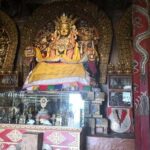
Day 6 shifts you from the desert’s big nature to the Gobi’s human spiritual thread at Ongyn temple. It was established in the 1760s by Bari Yonzon Khamba in a mountainous bank area along the Ongi River. Historically, the monastery had over 1,000 monks and a complex of around 30 temples.
Today it’s still active, but the scale is smaller, with only a few monks performing functions. That contrast is important. You’re not visiting only ruins. You’re seeing something that still holds daily religious purpose, just at a different size than its peak.
This day’s listed activities include hiking, visiting natural wonder spots, climbing up to cliffs, and photo shooting. So you’ll likely get a mixed day: walk, temple, viewpoints, photos. That’s a good format when the previous day was pure geology.
One practical point: monastery visits can involve respectful behavior and quiet observation. If you keep your pace calm and your attitude open, the place will feel more meaningful and less like a checkbox.
Kharakhorin and Erdenezuu: Chinggis Khan’s capital, then monastery tombs
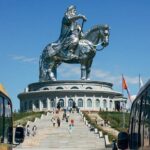
Day 7 is a classic Mongolian historical arc: you reach Kharakhorum, established in 1220 and described as the capital of the Great Mongolian Empire. The story includes Chinggis Khaan and his descendants (including Khaan Ugudei, Guyug, and Munkh) living there. Then came a hard stop: soldiers of the Chinese Ming Dynasty destroyed the town in the 14th century.
The ruins have been protected since 1961, and the site was named a UNESCO World Heritage Site in 1996. That UNESCO detail matters because it signals the area is cared for as more than just scenery.
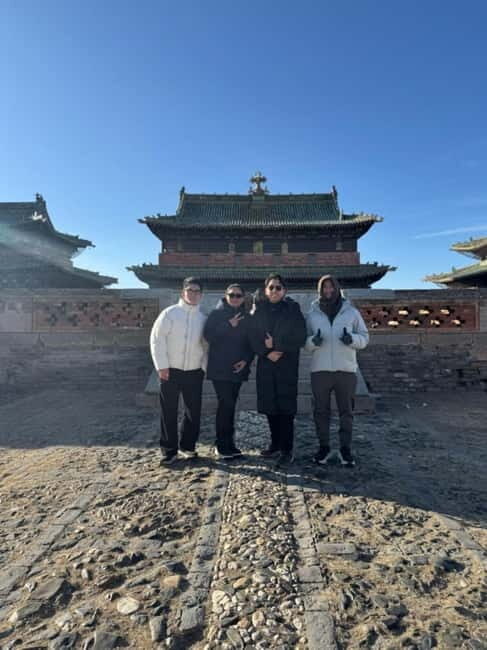
In the visit, you’ll tour Erdenezuu monastery, where you can see tombs and temple elements, including a real Buddhist temple. After that, you’ll also visit the Wall of the Mongolian Empire to learn more about the area’s story.
What I like here is that the tour connects the political history to lived religion and architecture. It’s not only about dates. It’s about how belief and power left physical traces you can still walk around.
Day 8 return to Ulaanbaatar, plus cashmere brand stops
Day 8 is the day back to Ulaanbaatar. It also includes shopping at cashmere factory stores of Goyo and Gobi, two of Mongolia’s most famous cashmere brands.
If you like souvenirs that are actually usable, cashmere can be a smart buy for colder places. But don’t ignore the reality: a store stop is still a time block in a long day. If you’re hoping to squeeze in extra sightseeing before your flight, this part can slightly limit your flexibility.
Still, it’s an easy way to turn the trip’s “Gobi warmth” theme into something you can take home—especially if you’re planning winter travel.
Price and pacing: what you’re really paying for
At $1,693 per person, the price can feel steep until you translate it into what’s included. You’re paying for an 8-day guided route across major natural and historical stops, with round-trip transfers from Ulaanbaatar, accommodations in family yurts or tourist camps, and most meals handled (breakfasts, lunches, and dinners). You’re also paying for the small-group handling—keeping a group around 10 people rather than the mass-tour chaos.
The start time is 7:30 am, which tells you the days run early. That’s typical for long-drive desert tours, and it’s often the difference between seeing places with daylight and arriving for dinner with nothing but dust in your eyes.
Pacing-wise, expect a lot of driving between stops. That’s not a flaw—it’s the deal with the Gobi. The upside is that the tour’s stops are picked so each driving block leads to a meaningful scene: sea-bottom fossils, an ice canyon, dunes with long visual lines, dinosaur discovery ground, and monastery/ruin history you can walk through.
Finally, feedback emphasizes organization, the tour guide, and the driver. That matters more than people think. When the route is long and the terrain changes, good driving and timing can make the difference between a smooth day and a stressful one.
Who this tour suits best
This fits well if you want:
- A guided Gobi + Kharkhorin route with minimal planning stress
- The chance to walk, hike, and climb up to viewpoints—not just ride and stare
- Small-group attention and day-to-day organization
It might not be for you if:
- You hate early starts and long road days
- You need high-comfort lodging every night, since you’ll stay in family yurts or tourist camps
Should you book this Gobi and Kharkhorin tour?
If you’re excited by natural wonders plus real Mongolian historical sites, I’d say yes. The schedule balances geology (white cliffs, ice canyon, dunes) with human landmarks (Ongyn temple, Erdenezuu, and Kharakhorum). You also get good value structure for the price: transfers, guides, accommodations, and a big chunk of meals.
My final nudge: go in with a flexible attitude about conditions. When the weather is cooperating, this route delivers that rare feeling of having the Gobi to yourself—just with a guide keeping you pointed the right way.
FAQ
How big is the group on this Gobi and Kharkhorin tour?
The tour runs with a small group of no more than 10 people, and it’s set up so only your group participates.
Where does the tour start in Mongolia?
It starts in Ulaanbaatar, with pickup offered and round-trip transfers included.
What time does the tour begin each day?
The start time listed is 7:30 am.
What meals are included?
The tour includes 7 breakfasts, 8 lunches, and 7 dinners. Alcoholic drinks are not included.
What kind of accommodations should I expect?
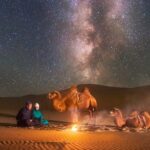
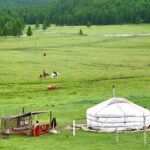
You stay in family yurts or tourist camps along the route.
What major sights are included?
Key highlights include Tsagaan Suvarga White Stupas, Yoliin Am, Khongor Els sand dunes, Bayanzag / Flaming Cliffs, Ongi Monastery (Ongyn temple), and Kharakhorin with Erdenezuu monastery.
What activities are planned during the trip?
Activities include hiking, visiting natural wonders, climbing up to cliffs for photo stops, plus exploring the monastery/ruins areas.
What if the weather is bad?
The experience requires good weather. If it’s canceled due to poor weather, you’ll be offered a different date or a full refund.