REVIEW · ULAANBAATAR
7 days Great Gobi Tour
Book on Viator →Operated by Danista Nomads Tour · Bookable on Viator
Granite cliffs and sand dunes in one week. This 7-day Great Gobi tour out of Ulaanbaatar strings together nomad life and big Gobi scenery in a tight, efficient run—plus pickup and a private-group feel. I love the nomad breakfast moment that makes the desert feel human, and I also like how the trip leans on strong guiding and driving (names like Tomuro and Singu Ratler show up in praise for a reason).
One consideration: you’re moving most days, so plan for long drives, and the operator flags that this experience depends on good weather, meaning plans can shift.
In This Review
- Key Highlights You’ll Actually Feel
- A 7-Day Great Gobi Loop From Ulaanbaatar
- Nomad Breakfasts and a Pace That Doesn’t Feel Like Sprinting
- Day 1: Ikh Gazriin Chuluu Nature Reserve (Granite In The Gobi)
- Day 2: Tsagaan Suvarga (White Stupa Cliff) and Deep Time
- Day 3: Yolyn Am Ice Field (Lammergeier Valley Feel)
- Day 4: Hongorïn Els (Khongoriin Els) Singing Dunes
- Day 5: Ongiin Khiid (Ongi Monastery Ruins) in the Middle Gobi
- Day 6: Baga Gazariin Chuluu (Caves, Petro Glyphs, and Choir Monastery Ruins)
- Day 7: Back To Ulaanbaatar and the Shift From Sand To City
- Price and Value: Is $1,400 Fair for a Week in the Gobi?
- Who Should Book This Gobi Week (And Who Should Rethink It)
- Should You Book Danista Nomads 7 Days Great Gobi?
- FAQ
- How long is the 7 days Great Gobi Tour?
- Where does the tour start, and what time does it begin?
- Do you get pickup?
- Is this a private tour?
- Are admission tickets included?
- What are the main places you visit?
- What happens if the weather is poor?
- What is the cancellation policy?
Key Highlights You’ll Actually Feel
- Nomad breakfast in the morning that sets the tone for the whole desert week
- Private-group touring with only your group, so the pace can match your comfort level
- Geology-heavy days: granite rock, a white-stupa cliff, an ice-valley gorge, and massive dunes
- Real cultural stops like Ongiin Khiid (Ongi Monastery ruins) rather than just viewpoints
- Sand dunes named Khongoriin Els, including the Singing Dunes nickname
- Photographer-minded guidance shows up in feedback, which helps you slow down for the good shots
A 7-Day Great Gobi Loop From Ulaanbaatar
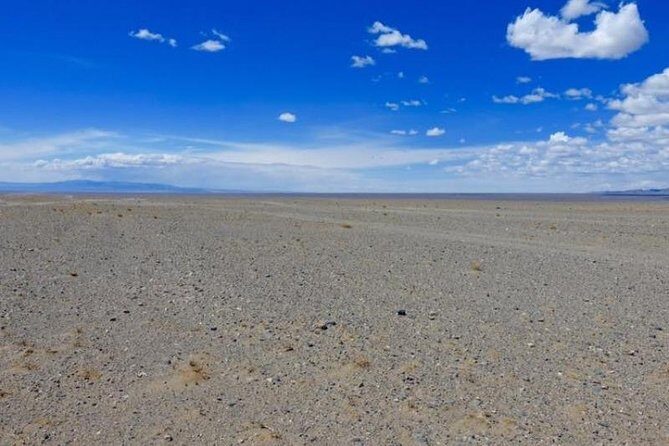
This tour is designed like a classic “Great Gobi highlights” loop. You start in Ulaanbaatar at 8:30 am at Danista Nomads on Orkhon Street, and you end back at the same meeting point. The total time is listed as 7 days (approx.), with a full day of driving between the desert zones and the return to the city.
The best part is how the week moves from one kind of scenery to another without feeling random. You get high stone and deep cuts in the earth (granite, cliffs, gorge walls), then you shift into wide open sand (Khongoriin Els), and you finish with monastery ruins tied to the Middle Gobi. That mix matters: it prevents the common problem of a long desert trip where everything starts to look the same after day two.
It’s also a group structure that can feel calmer than big bus tours. Because it’s private and “only your group” participates, your guide can adjust timing for photos, walking, and the pace your group prefers.
A few more Ulaanbaatar tours and experiences worth a look
Nomad Breakfasts and a Pace That Doesn’t Feel Like Sprinting
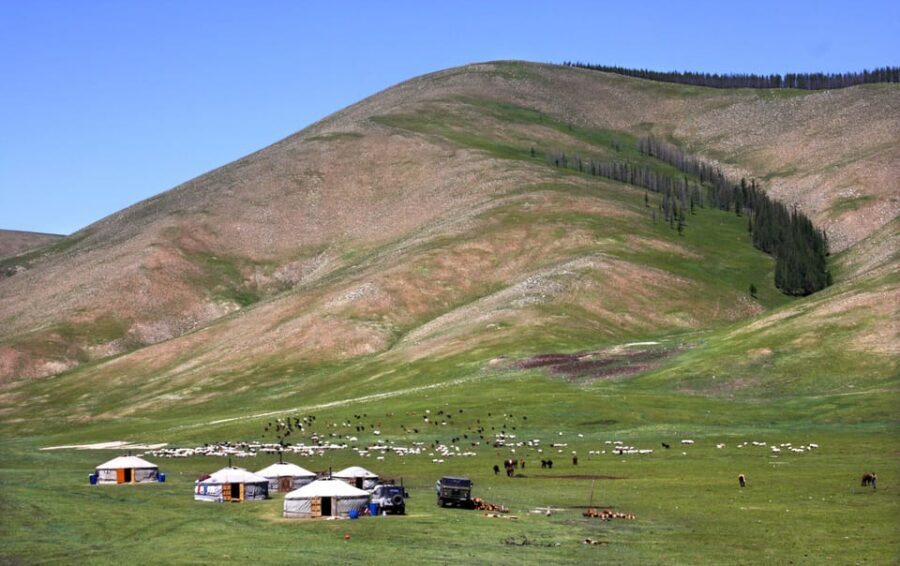
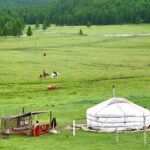
The tour’s rhythm is built around the idea that Gobi travel should include people, not only scenery. On at least one morning, you break bread with a nomad family before heading out toward Yolyn Am. That small detail changes the mood instantly—less like you’re touring ruins and more like you’re getting a glimpse of how daily life links to weather, distance, and land.
You also have a good chance of getting a guide who treats storytelling like part of the job. In feedback you’ll see names like Singu Ratler praised for knowledge and photography support, and Saruul also mentioned for safety and experience with the route. Another guide name that came up is Nomin, described as attentive to wishes.
The pacing is efficient, but it’s not “see everything in 30 minutes and move on.” One reviewer noted the itinerary is well chosen and time is optimized. Practically, that means you’re less likely to spend every day stuck staring out a window and more likely to get actual moments on foot or at meaningful stops.
Day 1: Ikh Gazriin Chuluu Nature Reserve (Granite In The Gobi)
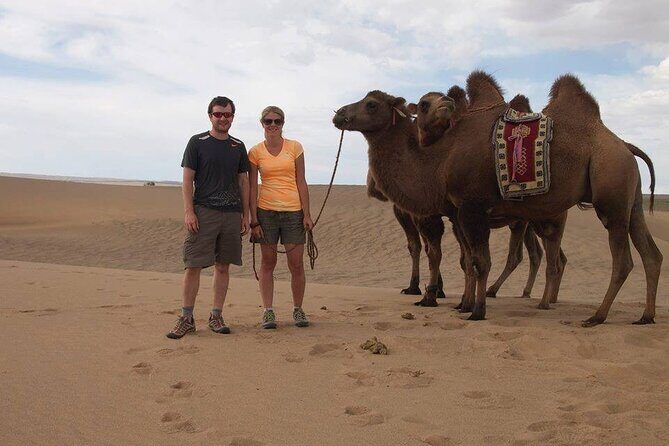
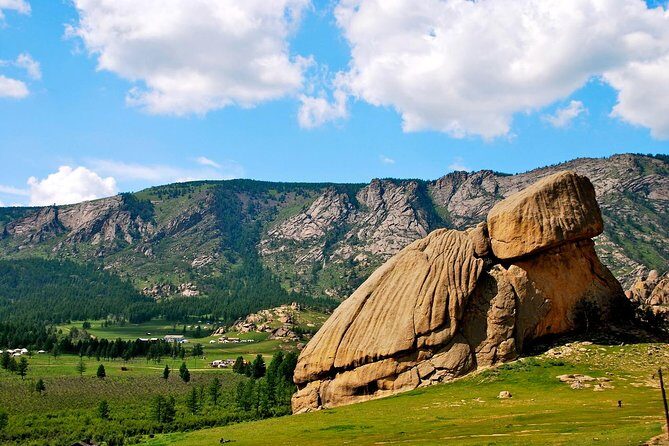
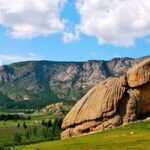
Your first day heads to Ikh Gazriin Chuluu Nature Reserve, described as a granite rock mountain in the Gobi with a peak around 1706 meters. Granite matters here because it’s a different texture from sand: it gives you hard edges, sharp shadows, and a “built” feeling to the terrain rather than the softness of dunes.
This is listed with admission ticket free, which can help your budget early in the trip. But the bigger value is orientation. Starting with a geology reserve helps you understand what you’re looking at for the rest of the week—rock types, erosion, and how the desert sculpts the land over very long time scales.
A practical note for you: granite areas can still be bright and hot in the wrong light. If you’re sensitive to sun, plan for shade breaks. If you’re into photos, this kind of rock often rewards you with side-light images when the sun angle changes.
Day 2: Tsagaan Suvarga (White Stupa Cliff) and Deep Time
On day two, you shift from granite to a cliff formation known as Tsagaan Suvarga (White Stupa). Locals gave the name, and the cliff is described as eroded by natural phenomenon, with a history mentioned as around 10 million years. That’s the kind of detail that makes the Gobi feel more like a planet in motion than a backdrop.
This stop is also listed with admission ticket free. More importantly, it’s the kind of place where you don’t just “look”—you notice layers and shapes. Erosion creates a visual map. If your brain likes patterns, you’ll enjoy trying to read the cliff like a timeline.
The downside? Cliff formations can feel similar to other bad-weather viewpoint stops if you rush. I’d treat this as a slow day: take a moment to stare, then walk a bit if there’s a safe path your guide recommends. The value is in the gradual realization of what erosion has done.
Day 3: Yolyn Am Ice Field (Lammergeier Valley Feel)
Day three brings you to Yolin Am (Yolyn Am Ice Field), also noted as Lammergeier Valley. It’s described as a deep and narrow gorge in the Gurvan Saikhan Mountains of southern Mongolia. This is one of those stops where the name already sells the idea, but the reality is even better: narrow gorge walls can keep cold air around longer, which is part of why “ice field” is a fitting phrase.
You’ll also start the day with breakfast with a nomad family, then drive to Yolin Am. That sequencing is smart: it gives you a human-scale start before you confront huge geological scale.
This is a good day if you like walking in a corridor. Gorges tend to slow you down, even if you’re not trekking far. Just remember you’re in a desert country where conditions can change fast; wear layers you can adjust, especially if the gorge feels cooler than the open road.





Day 4: Hongorïn Els (Khongoriin Els) Singing Dunes
Day four targets the sand dunes called Khongoriin Els, also known as the Singing Dunes. The description in the tour info gives you real size points—about 200 meters high and roughly 12 km wide. Those numbers help you picture what your eyes will struggle to fully capture.
Dunes aren’t just scenic; they’re interactive. When wind shapes the surface, you can often hear or feel the dune’s movement through sound and vibration. The Singing Dunes nickname is basically a promise that the sand will do more than sit there.
This day can be a highlight for first-time Gobi visitors because it flips the week’s visual palette. Up to this point you’ve dealt with rock and cliffs; now you’re out in a vast, shifting world. It’s also a good photo day because sand textures show up as gradients rather than flat color.
The consideration for you: sand days can be tiring if you don’t pace yourself. Take short steps, bring water, and avoid treating it like a marathon. Your guide can help you find the kind of spot where you can enjoy the dunes without burning energy too early.
Day 5: Ongiin Khiid (Ongi Monastery Ruins) in the Middle Gobi
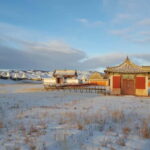
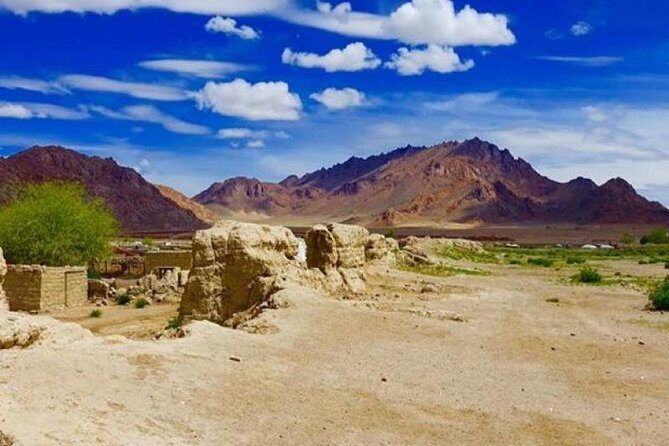
On day five you reach Ongi Monastery ruins, listed as Ongiin khiid or Ongi Monastery. It’s described as an active small monastery with monastery ruins, and it’s connected to the Middle Gobi village area near Saikhan Ovoo. You’ll drive here after lunch in the Bayanzag area.
This stop is listed with admission ticket included, which is a small but tangible value: your money doesn’t just go to “watching scenery,” it also offsets access to a culturally meaningful site. The key reason this matters is that Mongolia’s desert story includes religion and communities, not only animals and sand.
If you enjoy historical atmosphere, you’ll likely appreciate how a ruin doesn’t read as dead. It reads as in-between—like something changed, and locals kept living around it. That gives you a more layered understanding of the region than pure viewpoint tourism.
A practical tip: monastery sites often mean uneven ground. If you’re carrying a camera bag, keep your footing in mind and move slowly.
Day 6: Baga Gazariin Chuluu (Caves, Petro Glyphs, and Choir Monastery Ruins)
Day six goes to Baga Gazariin Chuluu and packs in several types of features. The tour info points to Bolort Cave, an eye treatment spa, rock images, petro glyphs, and burial mounds. It also mentions a ruin of a Choir monastery established by “Zaya” Damdin.
This is listed with admission ticket included, again helping your value for the day. And it’s one of those stops where you can spend time without feeling bored, because your attention can split between geology, markings on rock, and human traces across centuries.
The potential drawback is that sites like this can feel like “a lot at once” if your group is rush-prone. If you’re the type who likes facts, ask your guide to explain what you’re seeing—petro glyphs and rock images can make the desert feel like a museum you can walk through, as long as someone helps you interpret.
From the feedback I’ve seen about this style of tour, the best experiences happen when you let the guide’s knowledge do some of the work for you. If you get a guide who can also support photography—names like Singu Ratler have been cited—you’ll probably leave with clearer shots and better context.
Day 7: Back To Ulaanbaatar and the Shift From Sand To City
On day seven, you return to Ulaanbaatar, with the driving time listed as about 6 hours. Admission is listed as free, which makes sense since this is a return day rather than a new ticketed attraction.
This last day is more than a transfer. It’s where your brain resets. After a week of wide open space, city sounds can feel loud, and you might notice how everything feels closer than it did on day one. It’s also a good time to reflect on what stayed with you: the color shifts in rock, the scale of dunes, and the human moments like breakfast with a nomad family.
One practical thing: with six hours of driving, don’t overbook your evening. Plan something simple back in Ulaanbaatar, like a meal and early rest. Your legs may be fine, but your attention will likely feel dusty after days of sun, wind, and long horizons.
Price and Value: Is $1,400 Fair for a Week in the Gobi?
At $1,400 per person, this isn’t a bargain-basement trip. But for a 7-day private, remote-region tour, it can be good value if you care about the right mix: transportation between major sights, guided interpretation, and a route that hits multiple kinds of Gobi highlights.
Here’s the value logic I’d use:
- You’re paying for logistics that are hard to DIY in a week: long drives, remote access, and the sequence that connects rock formations to dunes to monastery ruins.
- Two days list admission ticket included (Ongi Monastery and Baga Gazariin Chuluu), which offsets some costs where entries are part of the experience. Other days list admission free, so you’re not paying for every stop.
- Feedback repeatedly points to drivers and guides as a major part of the quality. Names like Tomuro show up alongside comfort, safety, and expertise, which matters a lot when you’re far from services.
What could lower the value for you? Food and preferences. One review excerpt says accommodations and food are good if you’re not vegetarian or vegan. If you are vegetarian or vegan, I’d ask the operator ahead of time what’s realistic for your diet, because desert travel is not always flexible.
Who Should Book This Gobi Week (And Who Should Rethink It)
This tour fits you best if you want a one-week summary of the Great Gobi that goes beyond “point and shoot.” You should like scenery that changes shape: granite peaks, a white cliff, a gorge with an ice-field feel, Singing Dunes, and monastery ruins that add human depth.
You’ll also enjoy it more if you value safety and competence in the field. Multiple feedback notes mention experienced drivers and guides, including praise for being in safe hands and for responsive, helpful communication. If that type of reliability matters to you, this route seems built for it.
You might want to rethink if you hate long travel days. The schedule is designed for maximizing highlights in limited time, which means you’re in the vehicle often. Also, if you’re very sensitive to weather swings, remember the experience requires good weather and may shift dates if conditions are poor.
Finally, if your diet has strong needs, plan ahead. The only diet-specific note in the feedback is about vegetarian/vegan comfort, and it wasn’t universally positive.
Should You Book Danista Nomads 7 Days Great Gobi?
Yes, consider booking if your goal is a structured, guided week that covers the Gobi’s major “wow” zones while still including moments of real Mongolian life. The strongest reason to choose it is the blend: nomad breakfast plus signature geology like Tsagaan Suvarga and Yolyn Am, plus culture in the form of Ongi Monastery and Baga Gazariin Chuluu features like petro glyphs.
I’d especially like this for people who want guidance that helps you slow down for what you see. When the guide team includes people like Singu Ratler (credited with photography help), the experience tends to feel more satisfying than a basic ride-through.
If you’re deciding last-minute, do one thing: confirm your food needs and be flexible about weather. Then pack for a week outdoors—sun, wind, and temperature swings—and get ready for a desert trip where the days add up into a real story.
FAQ
How long is the 7 days Great Gobi Tour?
It lasts 7 days (approx.).
Where does the tour start, and what time does it begin?
It starts at Danista Nomads, Orkhon Street 1-37, BGD – 16 khoroo, Ulaanbaatar 16040, Mongolia with a start time of 8:30 am.
Do you get pickup?
Yes, pickup is offered.
Is this a private tour?
Yes. It’s listed as private, meaning only your group participates.
Are admission tickets included?
Some stops are listed as admission free (like Ikh Gazriin Chuluu, Tsagaan Suvarga, Yolin Am Ice Field, Hongorïn Els, and the return day), while others are included (Ongi Monastery on day 5 and Baga Gazariin Chuluu on day 6).
What are the main places you visit?
The stops listed include Ikh Gazriin Chuluu Nature Reserve, Tsagaan Suvarga (White Stupa), Yolin Am Ice Field (Yolyn Am), Hongorïn Els (Khongoriin Els), Ongi Monastery (Ongiin Khiid), Baga Gazariin Chuluu, and then return to Ulaanbaatar.
What happens if the weather is poor?
The experience requires good weather. If it’s canceled due to poor weather, you’ll be offered a different date or a full refund.
What is the cancellation policy?
You can cancel for free up to 24 hours before the experience’s start time for a full refund, with timing based on local time.